
Use case
Contractors
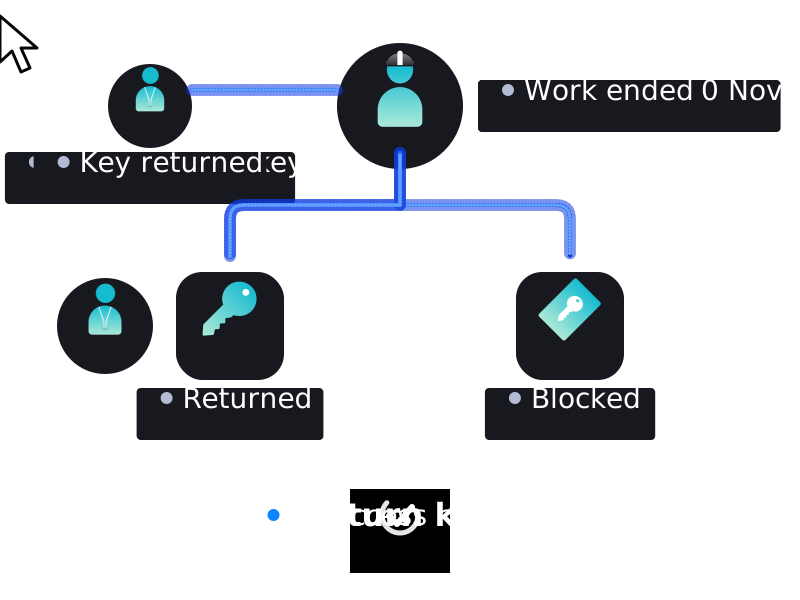
Each contractor has a sponsor and an end date. When the work ends, cards stop and keys come back.
The problem
Contractors get keys and cards to do a job.
The job ends, and the access often stays.
Nobody inside owns a contractor’s access, so nobody notices when it should have ended.
What portierX does
Each contractor is a person in portierX, with their company, a sponsor and an end date.

Keys and cards are issued against that record, each with a due date.

When the work ends, cards are blocked in the connected systems and keys are followed up until they are back.

The sponsor answers for anything still out.
Every issue, return and approval is on record.

Industries
Where the use case comes up most

Utilities and critical infrastructure
Remote sites, long-lived assets, and a record of who held which key and when it came back.

Real estate and multi-site organisations
One way of working across every building, site and manufacturer.

Healthcare and hospitals
Access stays correct through shift changes and contractor rotations.
Common questions about contractors
Can a contractor’s access end on a set date?
Yes. Each contractor has an end date. When it passes, the keys and cards show as due, and one step blocks the cards in SALTO and dormakaba MATRIX.
Who answers for a contractor’s keys?
The sponsor named on the contractor’s record.
Further reading
Insights related to this use case
Ask for a portierX invitation
portierX is available and ready to use, by invitation only. Public launch in early 2027.

 English (Australia)
 Deutsch
 Français
 Nederlands