

Temporary access is the access most likely to be wrong. A site has so many keys and badges to keep track of that few ever notice how many are held by people who do not work there. Cleaners come weekly, contractors for a job that runs a month, auditors and inspectors once a year, delivery and service crews in between.
Most are handed a key or a badge at the door, because it is the quickest way to let them get on with the job. That access is meant to last only as long as they are needed. Finding temporary access that should no longer exist means tying every short-term grant to the day it is due back and the reason it was given, then checking it actually ended.
Why temporary access is the access most likely to be wrong
Permanent access gets attention, because it is on the list everyone reviews. Temporary access gets none, because it was only ever meant to be there for a while. A visitor for a morning, a contractor for a fortnight, a locum covering a shift. In each, the grant is quick and the end is assumed.
Ending it is the hard part. It needs someone to notice the job is done, find the credential, and take it back, and that step has no natural owner. So the badge, the card or the key stays live, and an outside person keeps a working way in that nobody is tracking.
What does temporary access left open cost?
When a room is damaged or stock goes missing, the first thing you need to know is who could have got in, and a site that never closed its short-term grants cannot say. When an auditor asks for everyone with access to a regulated room, the contractors and visitors who were never signed back in do not appear, so the list is wrong and there is no way to prove otherwise. And the longer a key stays out, the more it costs to recover control, because a lock that can be opened by someone unknown has to be changed and its credentials reissued.
Where these grants get forgotten
The same moments repeat at every site.
- A contractor finishes a fit-out and keeps the badge that opened the plant room. Months later it still works, and the site has no record it was ever out.
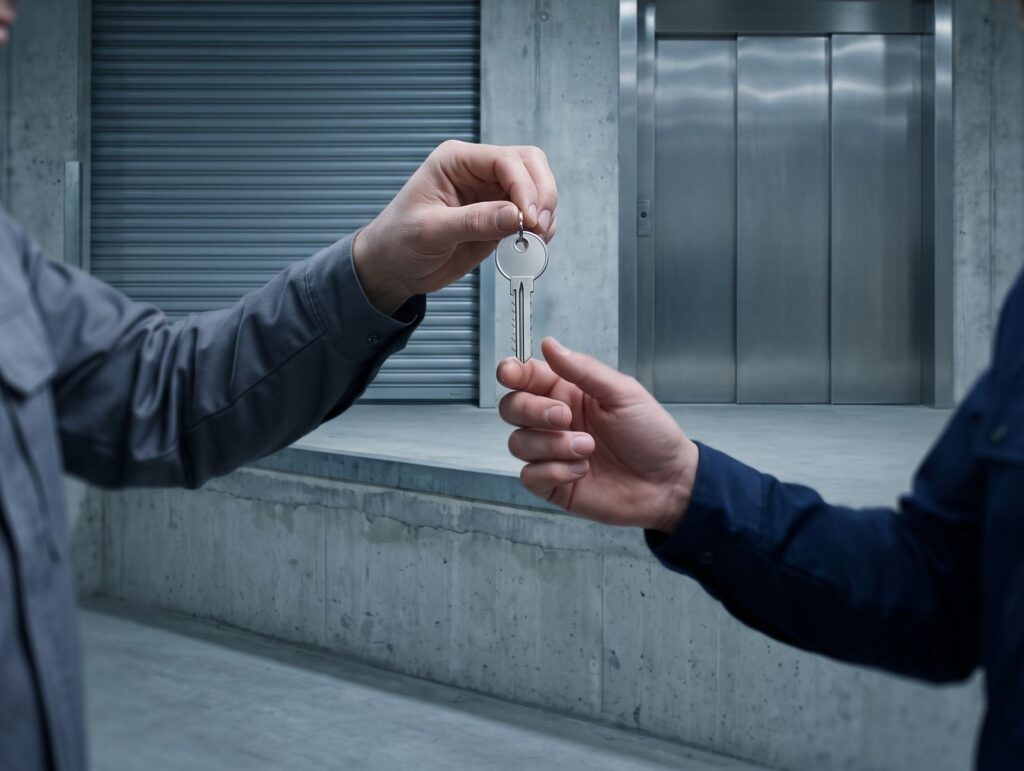
- A visitor is lent a key for the day and leaves with it in a pocket. It opens the door the next morning, and the one after.
- A maintenance firm visits every quarter and is let keep a key to save reissuing it. An outside company now holds standing access nobody reviews.
- A locum or a seconded manager is set up fast and closed down slowly, so their access outlives the cover by weeks.
- A spare card or a shared door code is passed around and tied to no one, so the record cannot say who holds it or when it should stop.
Each one started as a sensible shortcut and ended as access the site can no longer see.
How do you find temporary access that should no longer exist?
You give every temporary grant an end date and a reason at the moment you issue it, and you check both. That means keeping a complete record of who holds which credential and what it opens, across access systems and keys, tying each temporary grant to the day it is due back, and being prompted when that day passes and it is still out.
The two moments that matter are the return date and the day the job, the visit or the cover ends, which is where sound physical access offboarding earns its place. Anything past its end is called back in. Trying to hold this in a spreadsheet is where most sites lose track, because a static list cannot tell you what is overdue.
Keeping short-term access short across every site
One building with one door desk can hold this in memory. A dozen sites, several access systems, keys and badges and cards, contractors and visitors and stand-in staff, cannot. Short-term grants are made in different places, in different systems, often from different vendors that do not talk to each other, so no single place shows which are still open and overdue. The bigger the operation, the more short-term access it hands out, and the more of it quietly becomes permanent.
Closing that gap is hard precisely because the information is scattered. It means being able to answer, for the whole operation, which short-term grants are still open and why, instead of piecing it together system by system. That is the problem portier exists to work on, and the wider your operation, the more it is worth solving in one place rather than several.
The people at the door are told last
Whoever cuts the keys, issues the credentials and manages the doors is often the last to hear a job has finished or a visit is over, and the first to be called when a key or a badge cannot be accounted for. By the time the call comes, the temporary grant was made and forgotten somewhere they were not. The more the record shows what is out on loan and due back, not just what was issued, the less of that lands on them.
Temporary access will always be part of running a site. People visit, contractors come and go, shifts get covered. The sites that keep control plan the end of each grant when they give it, not when they finally notice it is overdue.
portier at MLAA 2026
portier will be attending the MLAA 2026 Conference, Marvel Stadium, Melbourne, 1 to 3 October. Visit us at Stand 28 to talk about managing keys, keeping access correct across multiple sites, and how to give the right people the right access as people come and go.
portier CEO Michael Stuer also takes the stage on “What your customers decide before they call you”, on Friday 2 October. Come and say hello, and let’s talk about access together.
 English (Australia)
  Deutsch
  Français
  Nederlands