
Use case
Someone leaves or changes role
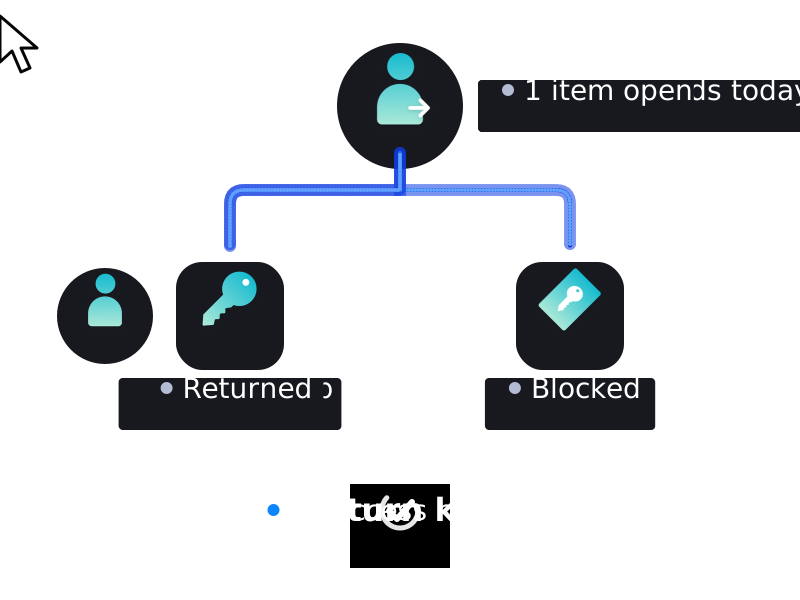
People leave. Access does not. Their cards are blocked in the connected systems, and every key is followed up until it is back.
The problem
A card that still works after the last day is a risk.
A key that never came back is a bigger one, because nobody can switch a key off.
When someone changes role, the old access usually stays and the new access is added on top.
What portierX does
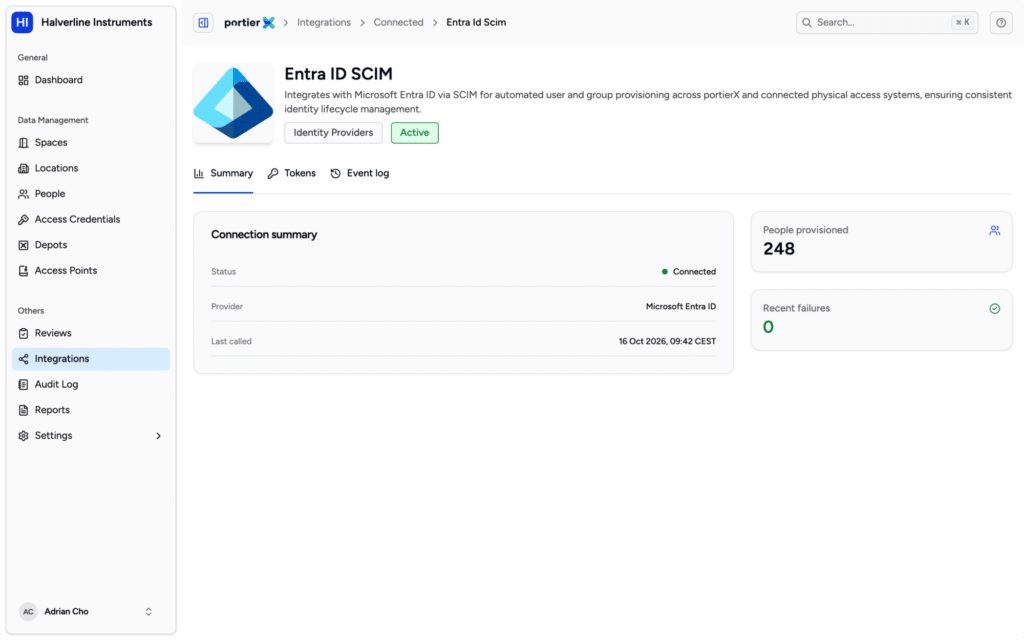
The change comes in from Microsoft Entra ID or an HR file, or someone records it in portierX.
Cards are blocked in the connected access control systems.

Every key the person holds is listed with what it opens, and followed up until it is back.

Each open item has an owner until it is closed.
For a change of role, the same steps run for the access the new role no longer needs.
Industries
Where the use case comes up most

Healthcare and hospitals
Access stays correct through shift changes and contractor rotations.

Government and public sector
Access decisions that can be explained years later, key by key.

Real estate and multi-site organisations
One way of working across every building, site and manufacturer.
Common questions about leavers and role changes
What happens to a key that is never returned?
It stays open on the person’s record, with what it opens, until it is back or reported lost. A lost key moves to the steps for a missing key.
Does portierX need an HR system?
No. A leaver can be recorded in portierX by hand. With Microsoft Entra ID or an HR file connected, the change comes in on its own.
In which systems are cards blocked?
SALTO and dormakaba MATRIX today. New systems are connected within weeks.
Further reading
Insights related to this use case
Ask for a portierX invitation
portierX is available and ready to use, by invitation only. Public launch in early 2027.

 English (Australia)
 Deutsch
 Français
 Nederlands