
Use case
A key goes missing
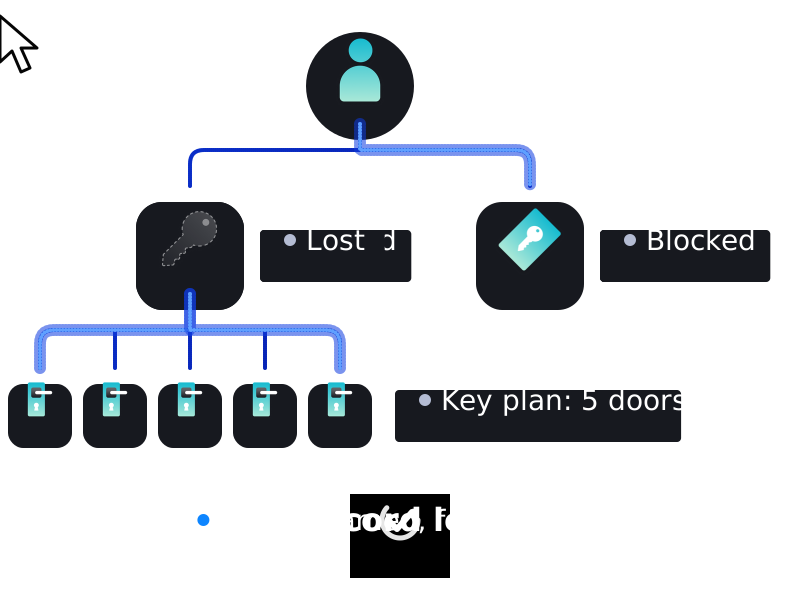
What the key opens, read from the key plan. Who has to act, and the follow-up tracked until it is done. A lost card or electronic key is blocked in its own system.
The problem
A lost key leaves one question open: which doors are exposed?
A master key can open a whole building.
Until someone knows what the key opens, nobody can decide whether to change one cylinder or a whole section of the master key system.
What portierX does
The loss is recorded on the person’s record, with the date and a note.

portierX shows what the key opens, read from the key plan.
Whoever has to act is named, and the follow-up is tracked until it is done.
A lost card or electronic key is blocked in its own system.

Industries
Where the use case comes up most

Government and public sector
Access decisions that can be explained years later, key by key.

Healthcare and hospitals
Access stays correct through shift changes and contractor rotations.

Utilities and critical infrastructure
Remote sites, long-lived assets, and a record of who held which key and when it came back.
Common questions about lost keys
Does portierX say which cylinders to change?
It shows which doors the key opens. Which cylinders to change is decided with the manufacturer of the master key system.
What happens to a lost card?
It is blocked in its access control system, and the loss is recorded on the person’s record.
Further reading
Insights related to this use case
Ask for a portierX invitation
portierX is available and ready to use, by invitation only. Public launch in early 2027.

 English (Australia)
 Deutsch
 Français
 Nederlands