
Le portierX que nous construisons
L’accès dont le poste a besoin
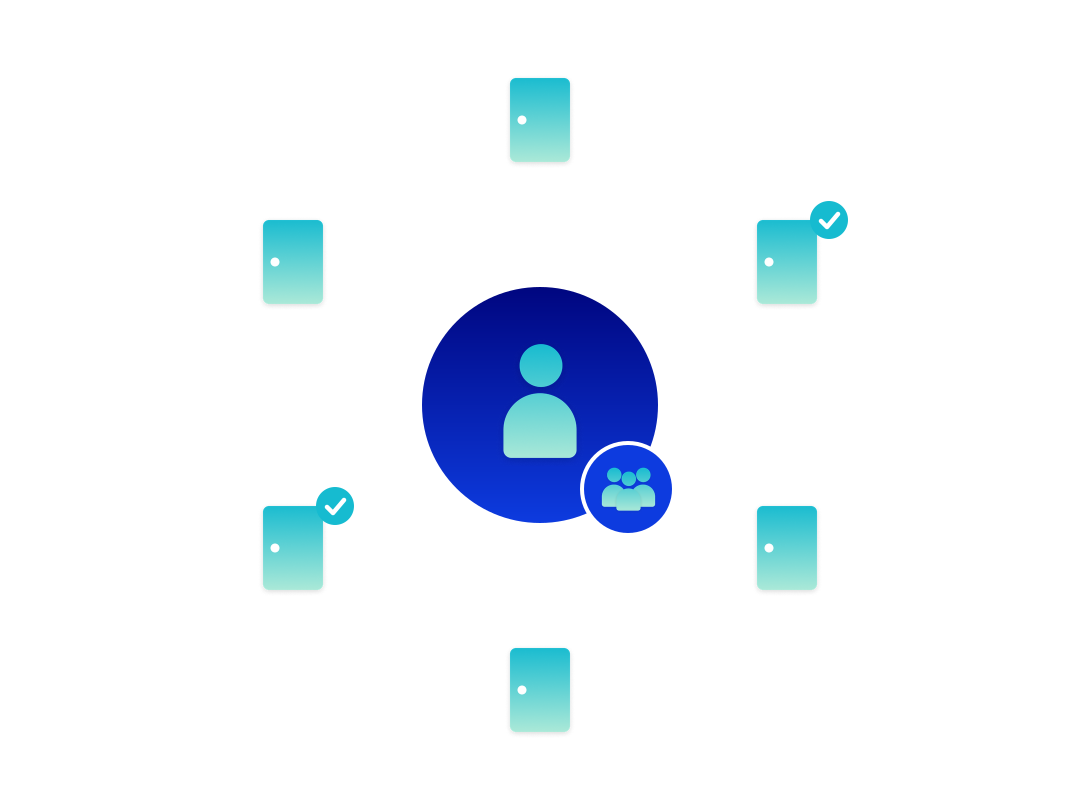
Access is handed out door by door and group by group, while people move through spaces.
People get their group’s access, not the access their job needs.
Comment l’accès dérive
Access is rarely given out once. It is given at the door, by the group, by whoever is there when someone needs to get in.
Every one of those decisions is reasonable on its own.
Nobody owns what they add up to, and what they add up to is the access nobody meant to leave open.
Sans direction, l’accès dérive.
Vers quoi évolue portierX
portierX est conçu pour accorder l’espace dont une personne a besoin, et seulement le temps qu’il lui faut.

When someone
leaves
Ses badges seront bloqués et ses clés suivies jusqu’à leur retour.
Built so far
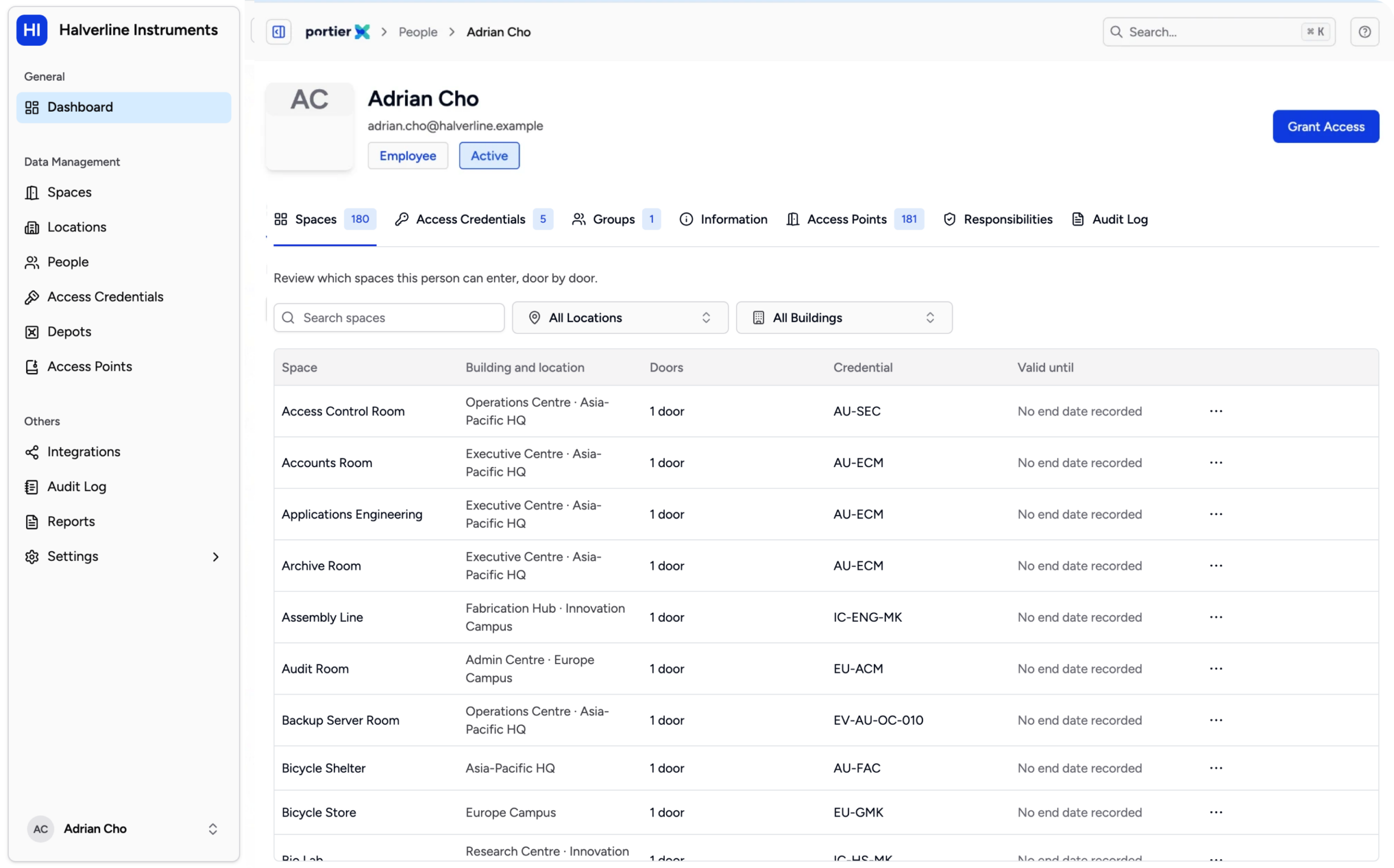
Ouvrez une fiche et voyez chaque espace et chaque porte que la personne peut ouvrir, y compris par une clé dont la date de retour est dépassée. Enregistrez chaque clé au moment du retour.

Contractors and
visitors
Chaque prestataire aura un référent et une date de fin, et son accès s’arrêtera avec le chantier.

Keys across
your sites
Chaque clé et chaque copie seront suivies entre les dépôts, les armoires à clés et les points de remise, au nom de la personne qui la détient.
Built so far
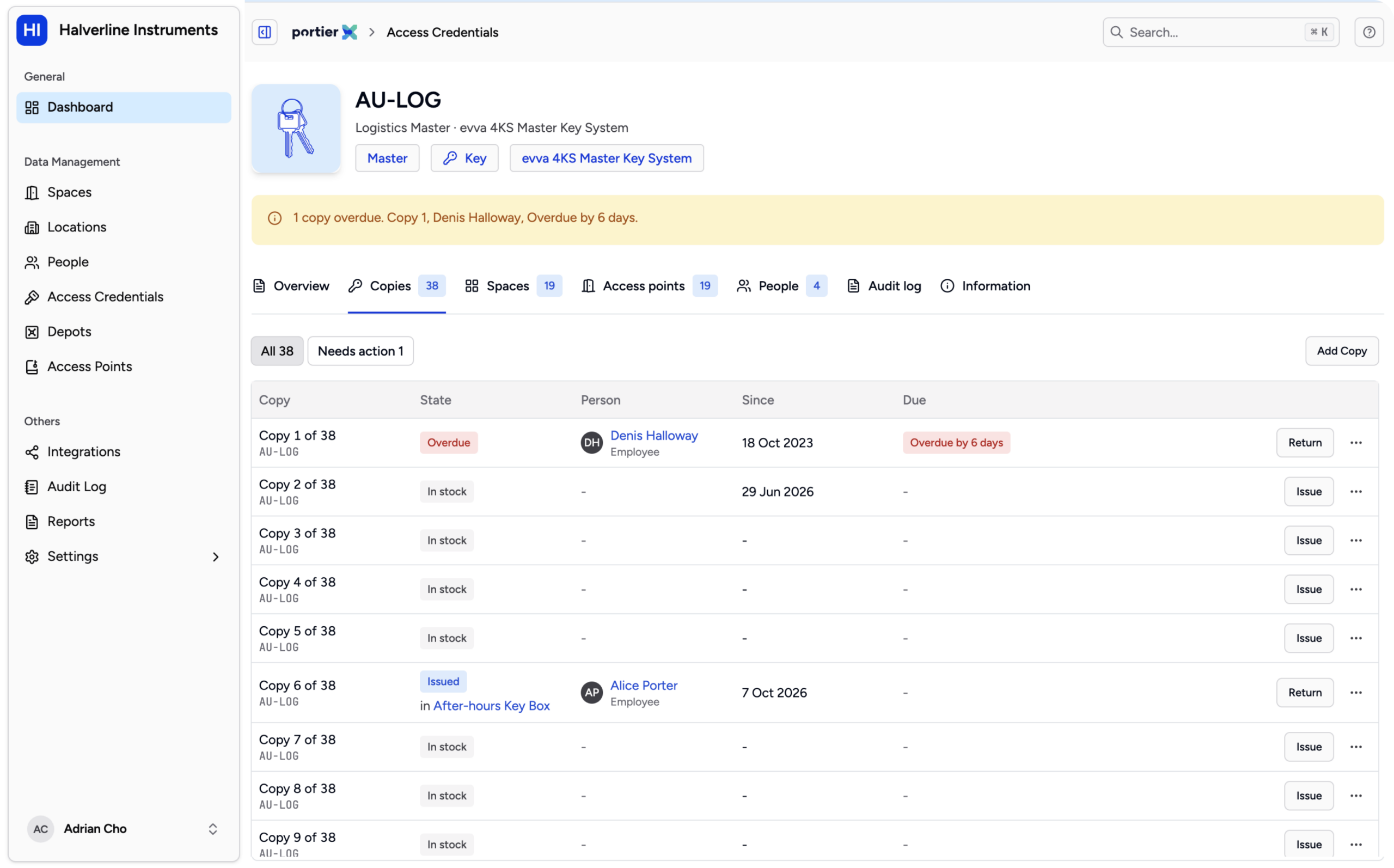
Remettez une clé ou un badge à une personne, enregistrez le retour et fixez une date de restitution pour chacun.

When a key
goes missing
Toutes les personnes qui doivent agir seront prévenues, et le suivi ira jusqu’au bout.

Protected
rooms
Pour les salles serveurs et les locaux techniques, vous verrez chaque clé et chaque badge qui ouvrent le local, passe-partout compris. L’accès sera validé par la personne responsable du local.

Reviews and
audits
Les responsables confirmeront qui a encore besoin de chaque clé et de chaque badge, et le dossier ira de la demande au retrait.
Built so far
Chaque modification est enregistrée, et toute personne disposant du droit d’export peut filtrer le journal et l’exporter en CSV ou Excel.
portier appelle cela la gestion de l’accès physique, pour les patrimoines qui exploitent plus d’un système d’accès en plus des clés.
Ce que nous ne construisons pas
portier n’est pas un produit de surveillance. portier tient le registre de qui détient quelle clé et de ce que cette clé ouvre.
- Pas de matériel. portierX ne remplace pas les serrures, les cylindres et les lecteurs que vous avez déjà.
- Pas de caméras. Ce qu’une porte a enregistré n’est pas l’affaire de portierX.
- Pas de comptoir d’enregistrement des visiteurs.
Demander une invitation
Jusqu’à son lancement, portierX est disponible uniquement sur invitation.

 English (Australia)
  Deutsch
  Français
  Nederlands